

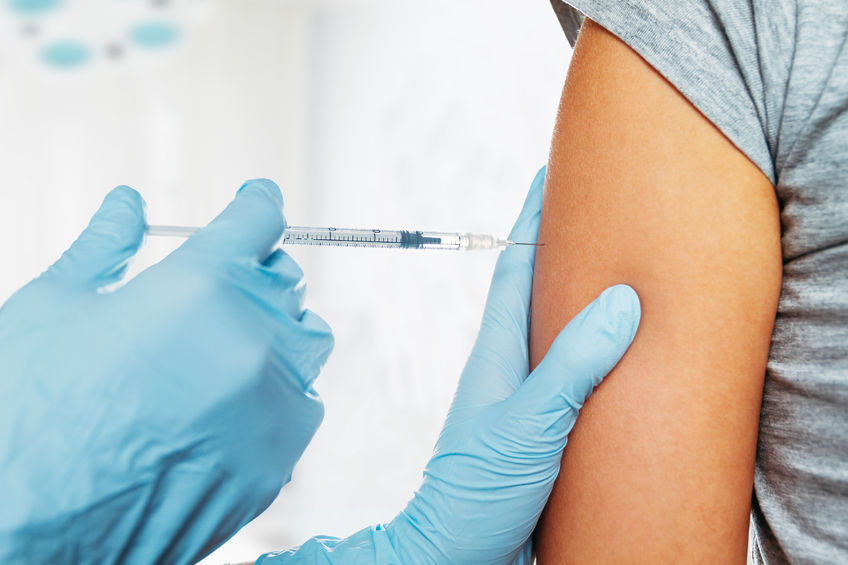
If you’ve seen conflicting headlines about vaccines and pregnancy this year, you’re not imagining it. At its core, though, the guidance for you as a pregnant patient hasn’t gotten more complicated. It’s actually gotten clearer, thanks to a new schedule from the American College of Obstetricians and Gynecologists (ACOG), the specialty organization that trains and guides OB/GYNs like ours. August is National Immunization Awareness Month, which makes it a good time to walk through exactly what’s recommended, when, and why.
In June 2026, ACOG released its own Maternal Immunization Schedule for the first time in its history, independent of federal guidance. That’s a significant shift. It happened because the CDC’s recommendations around pregnancy and vaccines have changed in ways that no longer fully align with the evidence OB/GYNs rely on, including the CDC’s decision to drop its recommendation for COVID-19 vaccination during pregnancy.
ACOG’s new schedule is endorsed by 13 medical and health organizations, including the American Academy of Pediatrics and the American Academy of Family Physicians. At FĒNOM, we follow ACOG’s guidance because it’s built specifically around what protects pregnant patients and their babies, reviewed by the doctors who care for you every day. Our goal here isn’t to wade into the politics of it. It’s to make sure you leave this page knowing exactly what’s recommended and why.
ACOG recommends four vaccines routinely for every pregnancy, each for a different reason:
Timing matters more for some of these than others. Flu and COVID-19 vaccines are flexible: any trimester, any time of year, with early administration preferred simply so protection kicks in sooner. Tdap and RSV are more specific, both landing in that late-pregnancy window because the goal is maximizing the antibodies your baby receives before delivery. We’ll flag the right timing for each at your prenatal visits, so this isn’t something you need to track on your own.
Here’s a detail that surprises a lot of returning patients: if you received the RSV vaccine during a previous pregnancy, you do not need another dose in a later pregnancy. Instead, your new baby will receive RSV protection directly through a monoclonal antibody shot, commonly known by the brand name Beyfortus, given shortly after birth. Some families choose this route even in a first pregnancy instead of the maternal RSV vaccine. Either path gets your baby protected; we’ll help you decide which fits your situation.
Not every vaccine belongs in a prenatal visit. Three are specifically not recommended during pregnancy: HPV, MMR (measles, mumps, rubella), and varicella (chickenpox). All three are live-virus vaccines, and the recommendation is to get them before pregnancy or wait until after you deliver.
If you already had one of these vaccines before realizing you were pregnant, take a breath: current data show no safety concerns in that scenario. It happens more often than you’d think, and it is not a reason for alarm.
A few additional vaccines, including pneumococcal, meningococcal, hepatitis A, and hepatitis B, aren’t routine for every pregnancy but may be recommended based on your individual health history, travel plans, occupation, or other risk factors. We’ll ask about these directly at your prenatal visits rather than leaving you to guess whether they apply to you.
A newborn’s immune system is still developing at birth, not weak or defective, just not finished yet. Vaccinating during pregnancy is one of the only ways to hand your baby real protection before their own immune system is ready to build it. That’s part of why pregnancy is such a meaningful window for this conversation: you’ll typically have close to a dozen prenatal visits, and we’d rather spread this information out across several appointments than overwhelm you with all of it at once.
We know some of you are coming in with real questions and even some hesitation, especially given how much the national conversation around vaccines has shifted. That’s a completely reasonable place to start from. Our job is to walk through the specific evidence for your specific pregnancy, not to lecture you.
Reach out before your next visit if you’ve had a serious allergic reaction to a previous vaccine, if you’re immunocompromised or managing a chronic condition that might change the recommendations above, or if you simply want to talk through the reasoning before deciding. We’d also rather answer a vaccine question over the phone than have you spend a week worrying about something you saw online.
You’ve got this! If you have any concerns or questions about vaccines during pregnancy, feel free to reach out to us. We’re here to support you every step of the way.